Interactive Recognition Displays: Everything You Need to Know About Digital Achievement Displays
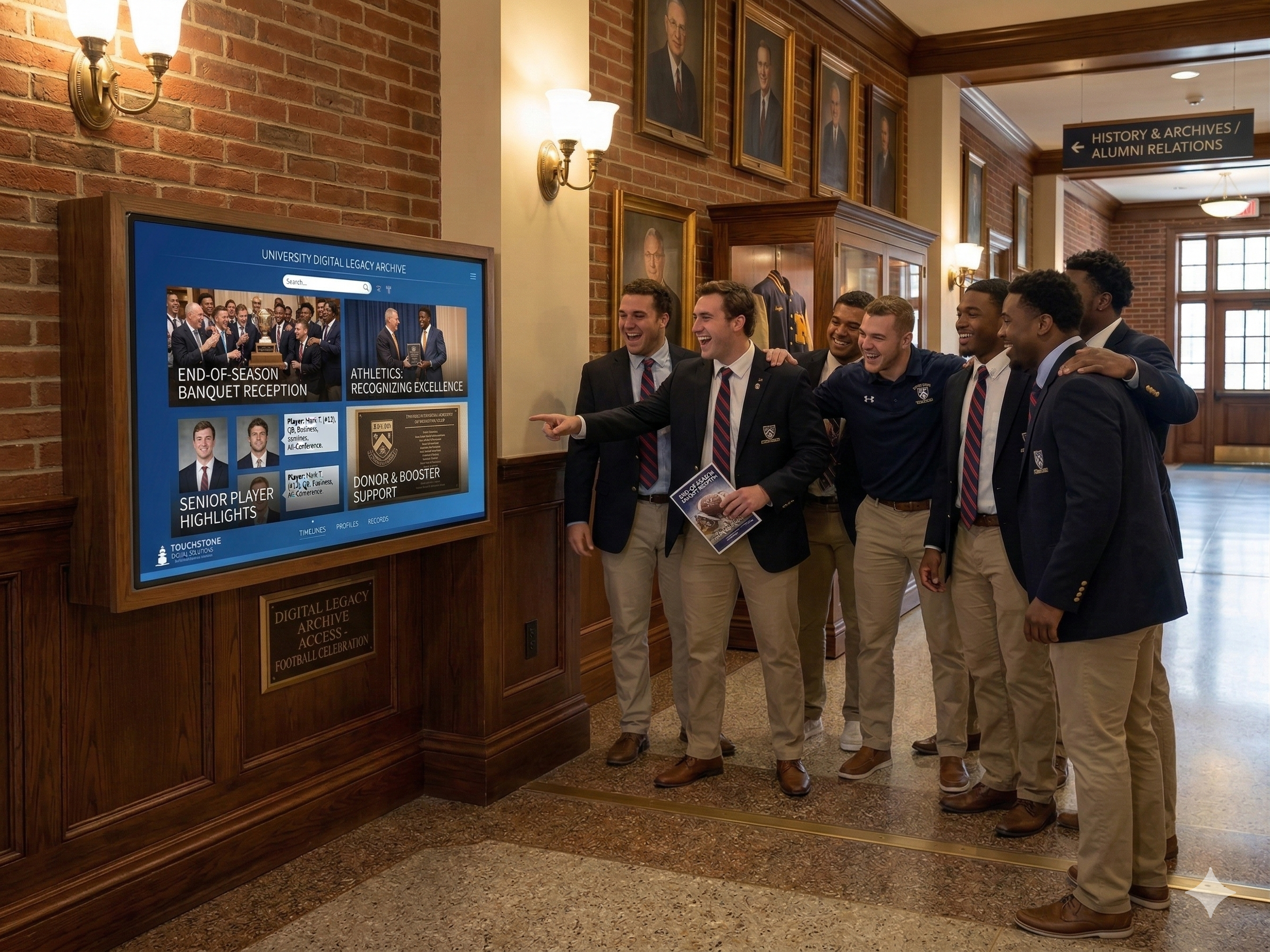
Recognition has always been fundamental to organizational culture, but the methods for celebrating achievement are experiencing a digital transformation. While traditional plaques and physical awards have served institutions for decades, they face inherent limitations. Space constraints force difficult decisions about what to display, static presentations cannot adapt to new achievements, and there is minimal engagement from individuals who walk past the same unchanging displays daily. Interactive recognition displays represent a fundamental shift in how organizations honor excellence. These digital touchscreen systems combine the permanence and gravitas of traditional recognition signage with the dynamic capabilities of modern technology for donor recognition. They create experiences that engage visitors, impress stakeholders, and solve practical challenges that have long frustrated administrators and development offices.
At Touchstone Digital Solutions specializes in creating interactive donor recognition displays, enhancing the experience on the donor recognition wall., we see firsthand why organizations are transitioning to interactive recognition. Digital displays eliminate space limitations by storing thousands of profiles in searchable databases rather than taking up limited wall space. They update instantly to honor new achievements without renovation costs or delays, and they engage modern audiences through interactive experiences that static displays simply cannot match. Furthermore, they provide measurable analytics about what content resonates most with viewers and integrate with existing organizational systems to automate recognition processes. Institutions implementing these systems report increased engagement with recognition content, enhanced donor satisfaction through the modern presentation of contributions, and significant cost savings compared to traditional plaque maintenance and expansion. This comprehensive guide explores how interactive recognition displays work, the benefits they provide, implementation considerations, and best practices for maximizing their impact on organizational culture and advancement efforts.
Understanding Interactive Recognition Display Technology
Interactive recognition displays combine several technological components to create engaging, informative experiences that go far beyond what traditional recognition methods can achieve.
Core Components and Functionality
At their foundation, these systems consist of commercial-grade touchscreen displays mounted in high-traffic locations throughout an organization's facilities. Unlike consumer televisions, these screens are designed for continuous operation, featuring industrial-grade components rated for heavy daily use across multiple years in donor recognition displays.
The software powering these displays manages extensive databases of recognition content, including biographical information, photographs, achievement descriptions, video content, and hierarchical relationships between individuals, departments, and institutional milestones. Content management systems allow authorized staff to add, edit, and organize this information without requiring technical expertise or outside assistance. Key technical capabilities include multi-touch functionality supporting simultaneous user interactions, and high-resolution displays ensuring clarity for detailed photos and text. These systems leverage cloud-based architecture, eliminating on-site server requirements, and feature responsive designs that adapt to various screen sizes and orientations. Additionally, they offer accessibility features like voice navigation and screen reader compatibility, alongside integration capabilities with HR databases and donor lists. digital asset management platforms.
The user interface presents recognition content through intuitive navigation structures. Browse-by-department functionality allows leaders to showcase team accomplishments, timeline views let organizations present institutional evolution chronologically, and search capabilities enable visitors to locate specific individuals instantly among thousands of profiles.
Content Types and Presentation Formats
Interactive recognition displays excel at presenting diverse content types that traditional static displays struggle to accommodate effectively.
For professional and departmental recognition, these systems can feature employee of the month or year profiles, career milestones, and leadership tenure on the interactive donor recognition wall. Digital trophy cases can showcase physical industry awards alongside digital context, preserving comprehensive historical records that are easily accessible to current staff and prospective hires, enhancing our donor recognition display.
Organizations also utilize these displays for corporate excellence and historical archives. This includes highlighting top sales performers, safety milestone achievers, and innovation award winners on the digital donor recognition display. Many organizations create continuous recognition boards that update annually while preserving historical records indefinitely, building an aspirational culture where team members see their peers celebrated.
Community and donor recognition is another critical application for our interactive donor recognition systems, which can also be featured on a donor recognition wall. Interactive digital donor walls can highlight major gift donors with naming opportunities and contribution impacts described in context. Capital campaign contributors can be organized by giving levels, and volunteer recognition can be prominently featured on the donor recognition wall. Development offices find immense value in touchscreen hall of fame software that can be updated immediately when new gifts are received, eliminating the awkward delay between contribution and recognition that occurs with traditional donor walls requiring physical fabrication.
Benefits for Modern Organizations
The transition from traditional to interactive recognition delivers measurable advantages across multiple institutional priorities.
Space Efficiency and Scalability
Physical space represents one of the most significant constraints facing facility administrators managing recognition programs, especially for the donor recognition wall. Traditional display cases fill rapidly, forcing difficult decisions about rotating older achievements to storage or limiting which accomplishments merit permanent display on the donor recognition wall. A single touchscreen display can host thousands of individual recognition profiles while occupying minimal floor or wall space. Organizations commonly transition from dozens of static plaques occupying entire hallways to single touchscreen installations that present exponentially more content. This scalability proves particularly valuable for growing companies, as capacity grows automatically without requiring facility modifications. Practical advantages include eliminating the need for periodic de-installation of older recognition, consolidating fragmented awards into unified digital experiences, and preserving historical recognition indefinitely.
Enhanced Engagement and Interaction
Traditional static displays function as passive information delivery, where visitors either notice them or walk past without engagement. Interactive displays transform recognition from passive viewing to active exploration, dramatically increasing the time spent with content. Usage analytics reveal that interaction sessions last significantly longer compared to the seconds spent glancing at traditional plaques on the donor recognition wall. Visitors explore multiple different profiles during single sessions, discovering achievements they wouldn't have encountered with static displays on the donor recognition wall. Engagement mechanisms include search functionality to instantly locate specific individuals, related content linking that suggests similar profiles, and media-rich elements like video highlights and photo galleries that create emotional connections impossible with text-only plaques.
Administrative Efficiency and Content Management
The operational burden of maintaining traditional recognition represents hidden costs that organizations often fail to calculate. Each new achievement requires obtaining quotes from plaque vendors, approving designs, managing fabrication timelines, and coordinating installation for the donor recognition wall. Digital recognition eliminates most of this operational friction, making it easier to maintain an up-to-date donor recognition wall. Authorized staff can update content directly through web-based systems accessible from any device. Adding new inductees to the donor lists, updating records, or correcting historical information requires minutes rather than weeks. Administrative advantages include immediate updates to honor achievements the same day they occur, centralized management allowing single staff members to manage all displays, built-in approval workflows, and bulk import features to populate displays with historical data through spreadsheets.
Implementation Considerations
Successfully implementing interactive recognition displays requires thoughtful planning that addresses technical, organizational, and cultural dimensions.
Location Selection and Installation Planning
Placement decisions significantly impact display utilization and recognition program effectiveness. High-traffic locations maximize visibility and engagement, while contextually appropriate placement enhances the prestige associated with recognition. Optimal installation locations include main entry lobbies for first impressions, facility entrances, development office waiting areas, and cafeterias or common areas to ensure regular viewing. Technical requirements vary by location, necessitating proper electrical infrastructure and network connectivity for the interactive donor recognition systems. Partnering with a comprehensive provider ensures smooth installation logistics, from mounting and electrical connections to network configuration.
Content Development and Historical Data Migration
The most time-intensive aspect of implementation typically involves collecting, organizing, and digitizing historical recognition content for donor lists and the interactive donor recognition display. Organizations often possess decades of achievement records in fragmented formats. The content development process involves inventorying existing recognition, identifying historical gaps, digitizing physical archives and records, standardizing data structures, and populating the initial content. Some organizations choose to launch displays with current recognition only, gradually adding historical content over time, while others prefer comprehensive launches that immediately demonstrate the system's full value.
Integration with Existing Systems
Interactive recognition displays deliver maximum value when integrated with other institutional technology systems, automating content updates and eliminating redundant data entry. Common integration opportunities include human resources information systems to automatically pull milestone data, and donor management systems to sync contribution information ensuring donor recognition stays current as gifts are processed. Modern cloud-based recognition platforms typically offer flexible integration options including direct API connections and automated file imports for digital donor recognition.
Best Practices for Maximum Impact
Implementation alone does not guarantee success. Organizations maximizing their recognition display value follow consistent best practices to ensure high-quality experiences for interactive donor recognition.
Content Quality and Presentation Standards
The perception of recognition prestige correlates directly with content quality. Poorly written descriptions, low-resolution photographs, or incomplete information diminish the honor meant to be conveyed. Quality standards require the use of high-resolution, professional photography, compelling narratives that highlight the impact of the achievement, accurate data verified across multiple sources, and consistent formatting structures so viewers know what information to expect. Establishing an editorial review process helps maintain these high standards.
Regular Content Updates and Maintenance
Recognition displays become stale without consistent attention to content currency. Establishing regular update cycles is crucial. Real-time recognition for major achievements should be added within days of occurrence, while seasonal updates or quarterly refreshes can highlight relevant upcoming events on the donor recognition display. Comprehensive annual additions ensure all major yearly milestones are captured on the donor recognition display, inspiring ongoing engagement. Assigning specific staff members responsibility for content maintenance ensures the displays remain effective and engaging, particularly for the interactive donor recognition.
Promotion and Integration into Culture
Even excellent displays deliver limited value if the community does not know they exist. Proactive promotion amplifies their impact on the recognition wall. Strategies include integrating the displays into facility tours, showcasing digital recognition profiles on corporate social media accounts, and directing attendees to the displays during organizational town halls or recognition ceremonies. When displays become natural reference points during conversations about excellence and company history, they fulfill their maximum potential.
Future Trends and Choosing the Right Solution
Interactive recognition displays continue to evolve, inspiring new ways to engage with donor names. Emerging systems incorporate artificial intelligence to personalize content based on viewer identity, while augmented reality applications can transform static physical spaces into interactive recognition experiences, extending discovery opportunities throughout an entire facility.
When evaluating recognition display options, organizations must assess technical capabilities such as content management usability, scalability, and accessibility compliance. Business considerations include pricing models, hardware inclusion, and long-term financial stability of providers. Calculating the total cost of ownership is essential, factoring in display hardware, software licensing, installation, and ongoing support.
Ultimately, implementing interactive recognition displays represents a significant investment that fundamentally transforms how organizations honor achievement, preserve history, and build communities around shared excellence. By replacing static presentations with dynamic, searchable, and media-rich experiences, organizations demonstrate that they value excellence enough to invest in modern celebration methods. Exploring robust solutions developed by dedicated technology providers, like our team here in Bedford, New Hampshire, ensures a seamless transition into the future of digital donor recognition.