The Future of School Memory Preservation: From Print to Interactive Displays
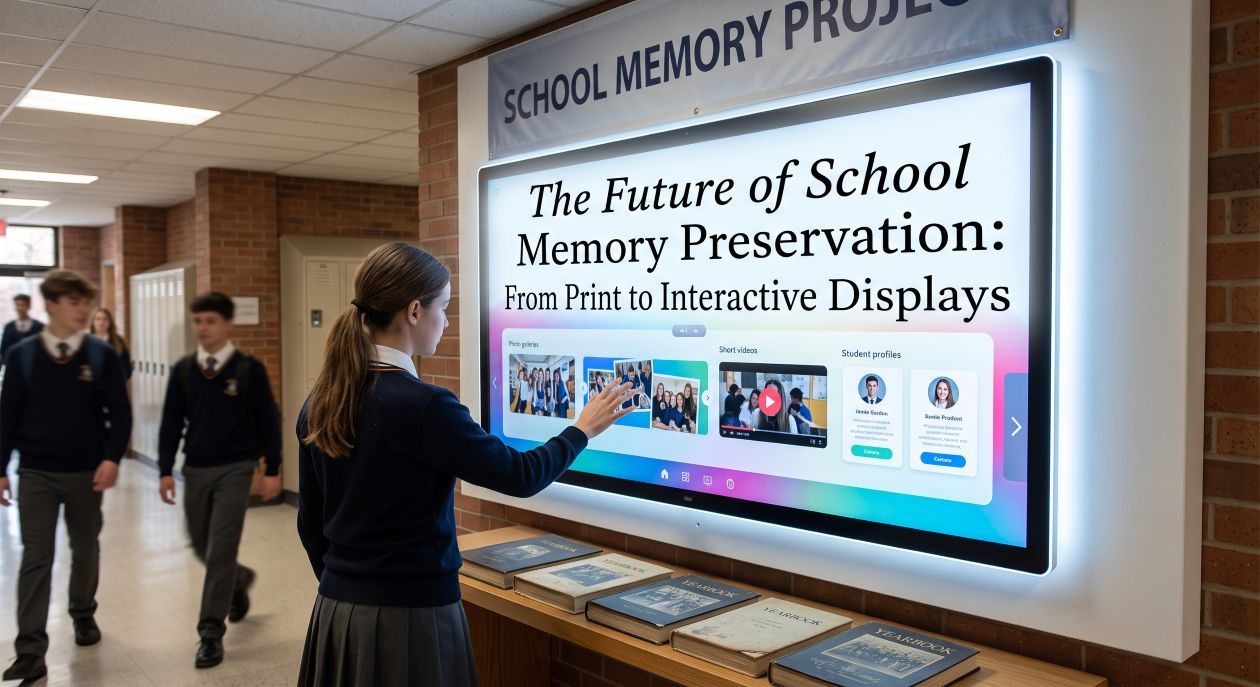
Yearbooks have served as the tangible record of academic milestones, athletics, creative arts, and friendships for over a century, making them a vital part of high school history. However, traditional printed volumes face mounting challenges: rising production expenses, rigid page limitations, vulnerable physical preservation, and distribution equity issues, prompting a shift towards online yearbooks.
Modern educational institutions are turning toward dedicated digital yearbook systems and interactive touchscreen archives to digitize their complete heritage. These platforms provide unlimited capacity, multi-generational searchability, and rich media integration, ensuring institutional memory remains active and accessible rather than locked away in storage.
The Landscape of Modern Yearbook Solutions
Educational communities approach yearbook modernization through three core delivery models: digitizing the existing collection, creating new interactive formats, and integrating multimedia elements.
1. Pure Digital Web and Mobile Platforms
Web-based and mobile solutions deliver annual records of high school yearbooks entirely through cloud-hosted systems accessible from personal devices, allowing easy access to yearbook content in PDF format.
- Unlimited Content Capacity: Eliminates the physical page caps that force editorial teams to leave students, clubs, or events out of the final publication.
- Rich Media Embedding: Incorporates high-definition video recaps, athletic play highlights, theatre performances, and audio recordings alongside traditional portrait photography to enhance the high school yearbook experience.
- Interactive Commentary: Provides structured digital signature spaces where classmates leave verified messages, preserving notes without fading ink.
- Perpetual Cloud Storage: Secures annual editions of school yearbooks against physical fire, water damage, or lost personal copies through encrypted, redundant backups.
2. Hybrid Delivery Models
Institutions balancing tradition with digital scale frequently adopt hybrid workflows that incorporate both traditional yearbook elements and online yearbook features. A curated, bound book acts as a keepsake for families desiring physical copies, while a comprehensive digital portal houses thousands of supplementary photos, banquet recordings, and athletic recaps via authenticated access codes. This preserves physical ritual while delivering expansive modern features.
3. Interactive Touchscreen Displays
Modern campuses increasingly deploy commercial-grade touchscreen kiosks and wall displays in main entryways, athletic concourses, and alumni centers. Rather than keeping archives confined to library basements, these interactive displays turn past and present yearbooks into shared community centerpieces. Visitors, alumni, and current students can walk up to a large format screen and immediately explore decades of campus history with a tap.
Core Advantages of Interactive Display Systems
Large-format interactive displays provide distinct community benefits that personal web portals or traditional yearbooks cannot duplicate on their own: they can showcase sports achievements and memorable photographs.
- Campus Focal Points: Central interactive displays create natural gathering spots during alumni reunions, homecoming weekends, and campus tours, showcasing the school's yearbooks collection.
- Cross-Era Searchability: High-speed indexed databases allow visitors to instantly search by student name, graduation year, athletic team, activity, or event title across multiple decades.
- Unified Recognition Integration: Yearbooks can coexist on the same interactive interface as athletic halls of fame, academic honors, donor recognition walls, and military service boards.
- Dynamic Content Updates: Unlike static ink, digital records can be amended with updated alumni achievements, career milestones, or posthumous recognitions long after graduation, enhancing the online yearbook experience.
- Universal Community Access: Visitors, prospective families, and incoming students encounter the institution's complete history immediately upon walking into the facility.
Practical Economics: Print Versus Digital Preservation
Evaluating the shift to digital requires examining the hidden costs of physical print manufacturing against modern software architectures.
Traditional Print Cost Drivers
- Direct Manufacturing: Print runs carry steep per-unit costs influenced by heavy page counts, full-color signatures, specialty bindings, and expedited freight.
- Unsold Overhead: Ordering safety margins of 5% to 15% frequently leaves expensive leftover inventory that must be discarded or stored indefinitely.
- Equitability Gaps: High shelf prices often place traditional yearbooks out of reach for lower-income families, leaving students without a digital record of their foundational years.
- Physical Archival Footprint: Storing fragile back-issues requires dedicated square footage, climate control, and manual organizational indexing to prevent deterioration.
Digital Platform Value
Digital subscription models and touchscreen software replace continuous print liabilities with predictable annual operational costs:
- Universal access options allow every enrolled student to view full records without economic barriers.
- Storage is entirely digital, freeing physical facilities from bulky archive maintenance.
- Production stress is reduced, as content can be submitted and organized continuously without strict factory press deadlines.
Essential Platform Capabilities
When choosing software to support digital yearbooks and public touchscreen displays, educational administrators must evaluate several technical criteria:
- Granular Search and Indexing: Platforms must support Optical Character Recognition (OCR) and deep tagging to ensure every scanned page, student name, and caption in school yearbooks is quickly discoverable.
- Responsive Multi-Device Support: Software should run smoothly on large commercial touch monitors as well as student smartphones, tablets, and desktop browsers.
- FERPA-Compliant Privacy Controls: Robust administrative dashboards must allow staff to restrict sensitive records, manage public versus private viewing tiers, and honor family data privacy requests.
- Data Portability and Redundancy: Institutions must retain full ownership of their digital assets, with straightforward data export capabilities and offsite backup options.
- ADA and Section 508 Accessibility are crucial for ensuring that yearbooks online are usable by everyone. Touchscreen interfaces should offer high-contrast settings, wheelchair-accessible navigation modes, and screen-reader compatibility for high school yearbooks.
Preserving History: The Digitization Workflow
Migrating decades of legacy physical books into an active digital display environment follows a structured preservation process:
Condition Audit: Inspect historical books for binding fragility, loose pages, and cover deterioration to determine scanning suitability for the yearbooks collection.
High-Resolution Capture: Scan physical pages at high resolution (typically 300 to 600 DPI) using flatbed or planetary scanners that protect book spines.
Text Recognition (OCR) technology is essential for digitizing high school yearbooks and making their content searchable, transforming photographs into accessible online yearbook entries. Process scanned imagery through OCR engines to convert printed names, lists, and class rosters into searchable text strings.
Metadata Tagging: Assign accurate tags for graduation years, student names, faculty roles, and extracurricular programs to streamline search filters.
System Upload and Verification: Ingest files into the display software and verify layout fidelity across touchscreen kiosks and remote web portals.
Community Engagement and Tradition
Transitioning to digital platforms does not mean losing cherished milestones. Instead, schools can build refreshed traditions that leverage interactive capabilities, integrating sports highlights and yearbook content into the experience:
- Digital Launch Presentations: Host celebration assemblies where annual video recaps and new digital archives are unveiled on central auditorium displays.
- Interactive Message Stations: Place dedicated tablets or kiosks in communal areas during graduation week to allow students to exchange digital messages, signatures, and photographs for the online yearbook.
- Alumni Discovery Portals for colleges and universities enhance the experience of reconnecting with classmates. Give returning alumni seamless tools to look up former teammates, browse vintage photos, and reconnect during anniversary events.
- Student-Generated Media Contributions: Invite student media clubs, athletic departments, and arts programs to submit video clips, interview snippets, and behind-the-scenes recordings to expand historical depth.
Data Privacy, Copyright, and Governance
A successful digital archive program for high school yearbooks requires clear legal and governance protocols regarding permission for digitizing yearbooks.
- Student Privacy Compliance: Align platform security with directory information policies, ensuring clear parental notification channels and individual exclusion workflows.
- Media Licensing: Secure written digital reproduction releases from contracted event photographers, and ensure embedded background audio uses royalty-free or properly licensed music libraries for school yearbooks.
- Access Segmentation: Protect sensitive alumni directory information by keeping personal contact records isolated from publicly browseable historical display pages.
- Long-Term Preservation Planning: Maintain current file formats and review archival backups systematically to protect against digital obsolescence as display operating systems evolve.
Moving Toward a Modernized Archive
Transitioning institutional memories from dusty storage closets to vibrant, interactive digital environments is a durable investment in community identity. By combining web accessibility with physical touchscreen displays, institutions ensure every class, athletic team, and historical milestone remains preserved, searchable, and celebrated for generations to come.