The Complete Guide to Interactive Digital Yearbooks
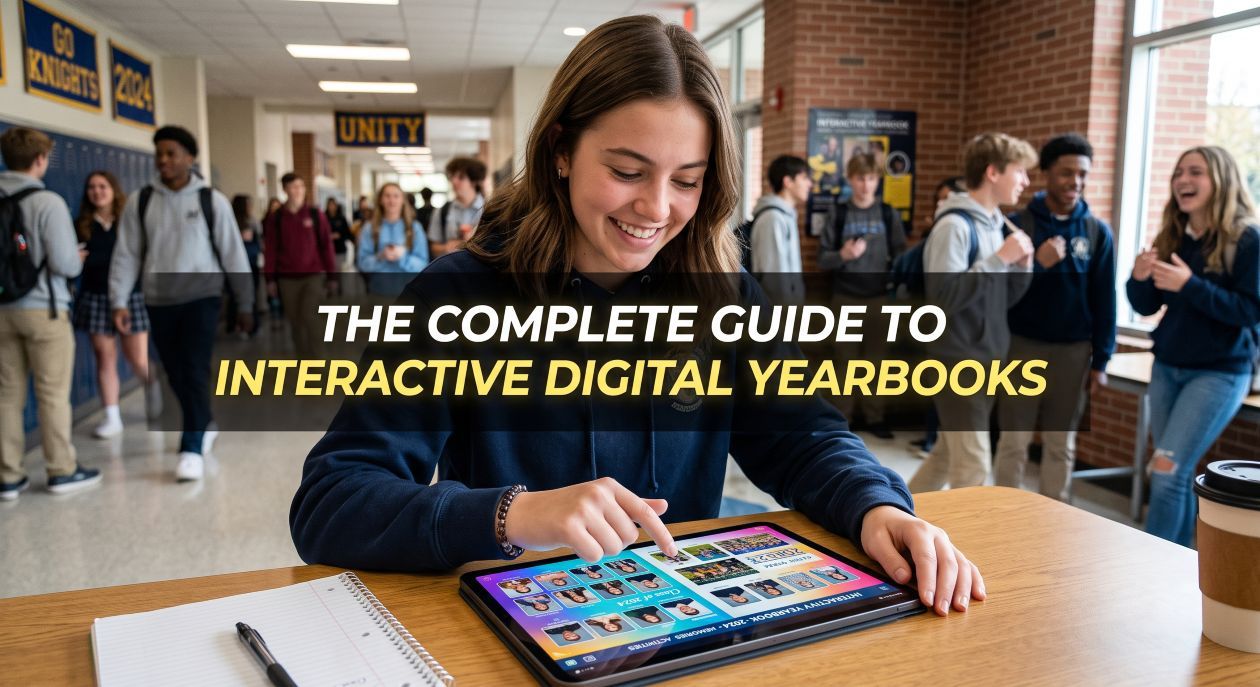
Educational institutions face an ongoing challenge: how to capture the vitality of student life while ensuring those memories remain accessible for decades to come. Traditional printed high school yearbooks have served as physical keepsakes for generations, yet they face clear constraints. Static printed pages are limited by strict print deadlines, physical space, recurring manufacturing costs, and the unavoidable risk of damage or loss over time.
Interactive digital yearbook platforms transform memory preservation into an active, dynamic experience. By moving beyond paper, these web-based and touchscreen solutions expand school archives into living records that combine high-resolution photography, video highlights, audio recordings, and searchable directories. The result is an accessible, enduring archive that connects current students, families, and alumni regardless of distance.
What Is an Interactive Digital Yearbook?
An interactive digital yearbook is a cloud-based platform designed to archive and showcase institutional history, student milestones, and campus activities. Rather than existing as a single physical volume published once a year, it operates as an ongoing multimedia repository accessible through two primary channels: the yearbook online and a dedicated device.
- Interactive On-Campus Displays: Large-format commercial touchscreens positioned in high-traffic areas such as main lobbies, athletic concourses, libraries, and student centers can facilitate the making of a yearbook online. These displays act as interactive focal points where visitors, students, and staff can explore archives hands-on.
- Responsive Web Portals: Cloud-hosted web platforms accessible securely from computers, tablets, and smartphones worldwide.
Central to these systems is a modern content management system that allows designated staff, advisors, and student editors to upload, organize, and publish media without writing code, essential for creating a school yearbook today.
Core Advantages Over Traditional Print
Transitioning to digital memory preservation delivers distinct improvements across engagement, reach, and archival durability.
Worldwide Accessibility
A physical yearbook remains tucked away on a shelf or packed into storage once a graduate moves away. Digital yearbooks remove geographic friction entirely. Current students can view activities on their phones, parents can share milestones with distant relatives, and alumni living across the globe can revisit their school years anytime.
Dynamic Multimedia Storytelling
Print is fundamentally limited to static photographs and brief printed captions, unlike the dynamic content found in a yearbook online. Digital archives bring school history to life through multiple media formats:
- High-Definition Video: Game-winning athletic moments, musical recitals, theatrical performances, and commencement addresses preserved in motion.
- Audio Recordings: Speeches, student interviews, and band performances that add a vibrant auditory layer to visual archives.
- Comprehensive Photo Collections for the school's yearbook can include candid shots that capture the spirit of the community. Rather than cutting hundreds of photos due to physical page limits, digital systems accommodate thousands of images, ensuring broader representation across the entire student body in the high school yearbook.
- Chronological Milestones: Interactive event timelines that map the progression of academic terms, sports seasons, and club initiatives.
Instant Search and Intelligent Filtering
Finding specific memories in a 300-page book requires slow, manual page-turning. Digital platforms provide intuitive discovery tools that surface information in seconds:
- Search by student or faculty name with predictive autocomplete.
- Filter by graduation year, sports team, fine arts program, or academic department to create customized yearbook pages.
- Run full-text keyword searches across captions, award rosters, and articles.
These tools dramatically increase engagement time, turning passive flipping into active exploration.
A Living, Updatable Archive
A traditional volume is locked months before the school year concludes to accommodate lengthy printing schedules, often omitting spring sports, final academic honors, and graduation ceremonies.
In contrast, digital platforms function as living repositories updated in real time. Spring events, summer accomplishments, and post-graduation achievements can be added as they happen, maintaining an accurate and continuous institutional history.
Essential Features of a Modern Platform
When evaluating digital yearbook and recognition software, institutions should focus on core capabilities that ensure ease of use, security, and sustained participation in making a yearbook.
Intuitive Content Management
A platform must be straightforward to manage. Drag-and-drop media organization, batch image uploads, and customizable templates enable advisors and student committees to maintain records efficiently without technical training or dedicated technical support.
Responsive Design
Content must scale across all display sizes. Whether viewed on a 65-inch 4K touchscreen on campus or a five-inch smartphone screen via a mobile browser, layouts, touch controls, and typography should remain legible and responsive to enhance the digital experience.
Granular Privacy and Access Permissions
Protecting student data in the yearbook online is paramount. Modern platforms incorporate administrative access tiers, media permission flags, and optional password-protected sections, ensuring that institutions retain full control over public versus private content.
Social Amplification
Integrated sharing links allow community members to share approved photos, athletic milestones, and achievements to social channels, ensuring that every candid moment is treasured. This authentic community-driven sharing strengthens school pride and broadens the school's yearbook reach.
Strategies for Successful Campus Implementation
Launching an interactive yearbook today requires structured planning across content preparation, hardware placement, and community outreach to ensure a successful digital experience.
Establish Archival Scope
Institutions should determine whether to focus initially on current academic terms or launch with a digitized historical archive. Many organizations begin by establishing workflows for the active school year, systematically digitizing past physical high school yearbooks in phases using staff, student groups, or dedicated archival services.
Position Displays for High Visibility
For campuses implementing interactive touchscreen displays, location dictates usage:
- Place kiosks near main entrances, athletic halls, or auditorium lobbies where natural pedestrian traffic slows down to promote the yearbook online.
- Ensure installations adhere to standard accessibility guidelines for reach and height.
- Protect hardware with durable commercial-grade enclosures designed for continuous public operation.
Involve Students in Archival Curation
Engaging media classes, photography clubs, and journalism programs transforms digital curation into an applied educational project. Students gain hands-on experience in digital asset management, photojournalism, and historical research while taking ownership of their school's narrative.
Unifying Yearbooks with Campus-Wide Recognition
Digital yearbooks offer maximum value when integrated into a broader digital recognition ecosystem rather than remaining an isolated project.
- Athletics play a significant role in the school's yearbook, showcasing achievements and milestones that are treasured by the community. Link yearbook rosters directly to team records, career statistics, and hall-of-fame inductee profiles.
- Academics and the Arts: Spotlight honor societies, scholarship recipients, art gallery exhibits, and musical productions alongside general student life in the high school yearbook.
- Donors and Alumni: Acknowledge community benefactors, chronicle distinguished graduates, and document reunions within a single connected interface.
Measuring Impact and Archival Success
Because digital platforms capture interactions, administrators can assess engagement far more accurately than with physical media:
- Engagement Metrics are vital for understanding how well the community interacts with the yearbook and its candid content. Track total sessions, average browsing duration, and repeat visits over time to assess the effectiveness of the yearbook maker's digital experience.
- Content Popularity: Review the most searched names, most viewed albums, and highest-trafficked event galleries to inform future coverage.
- Community Reach for the school's yearbook: Evaluate external access numbers to see how effectively the yearbook online platform engages alumni and extended family outside the local area, especially when they want to make a yearbook online.
Sustainable Preservation for the Modern Era
As educational environments evolve, the tools used to capture their defining moments must evolve as well. Interactive digital yearbooks respect traditional preservation while providing modern accessibility, unlimited multimedia depth, and enduring durability, making them a valuable yearbook maker tool. By turning yearbooks into living digital archives, institutions ensure their history remains active, accessible, and meaningful for generations to come, emphasizing the importance of publishing yearbooks.